
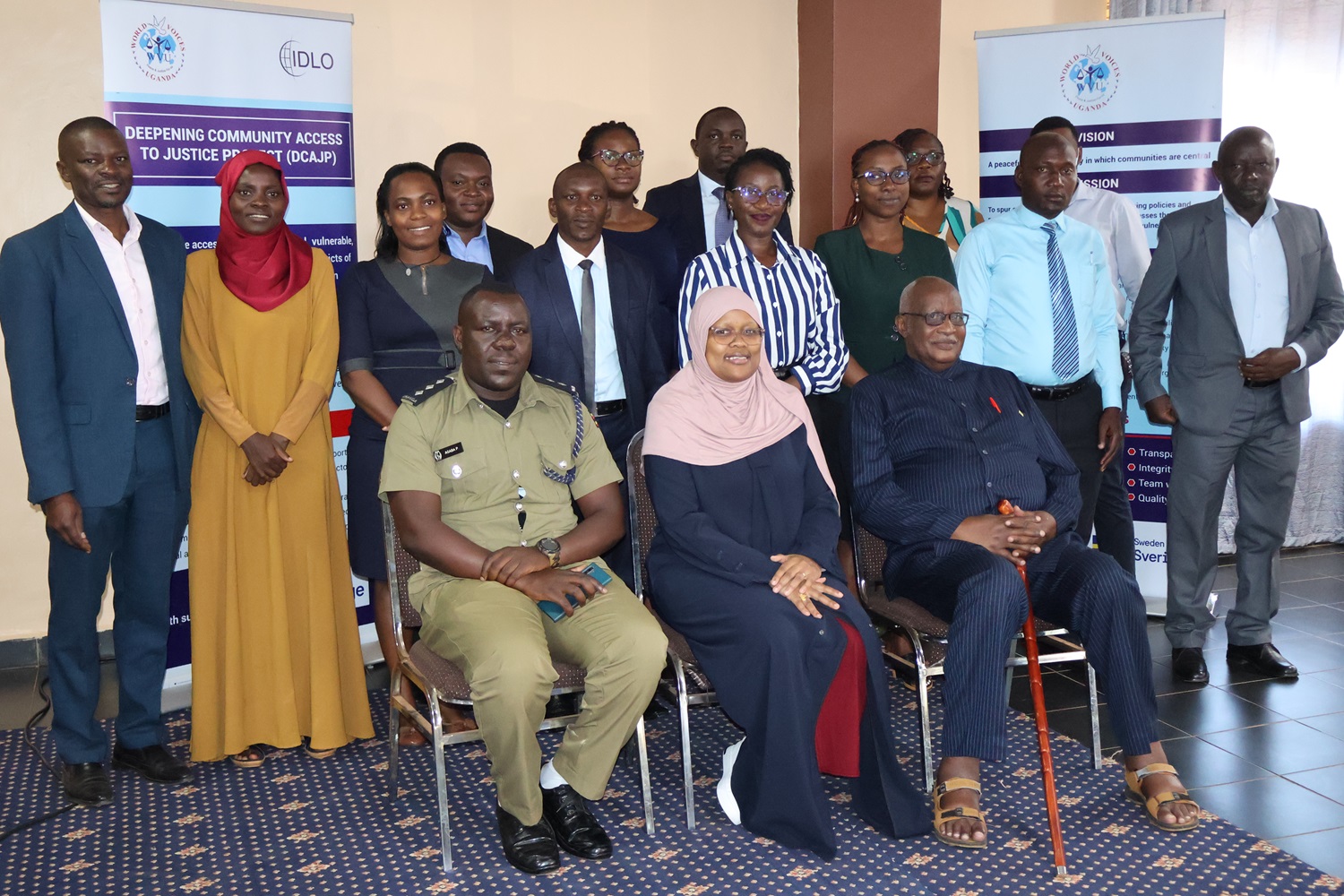
KAMPALA
World Voices Uganda (WVU) with support from the International Development Law Organization (IDLO) has enhance capacities of Formal Justice Actors on the Informal Justice systems in Uganda, including judicial officers, advocates and other key Justice Law and Order Services actors, about the nature and operations of the informal justice systems.
The training intended to further discuss how to close the gaps between formal and informal actors, follow up on the previous actions as well as developing a sustainable plan for the coexistence of both formal and informal justice systems.
On the 26th and 27th of September last year, World Voices Uganda conducted a 2-day training of formal and informal justice actors about the nature and operations of the informal justice systems.
The training deepened their understanding and appreciated the role of informal justice systems.
Gard Benda, the Country Director World Voices Uganda said courts of law are clogged with a lot of cases which end up delaying justice to the vulnerable people.
Benda said World Voices Uganda began thinking around community access to justice driven models where the informal Justice Actors become handy in fulfilling this.
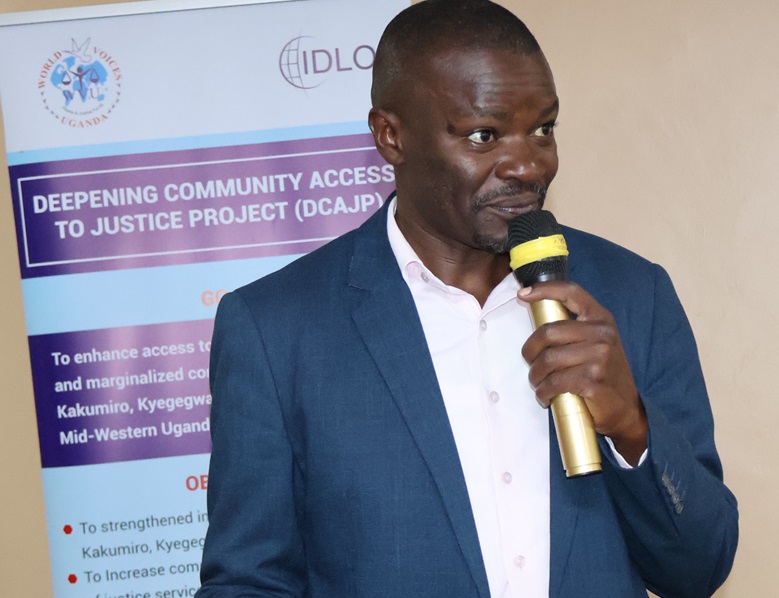
He said that reports indicate that over 80% of cases are handled outside the formal courts meaning that the Informal Justice Actors are at the center stage of ending injustices in communities.
Hon Justice John Patrick Tabaro, the retired Principal Judge who also described the linkage between formal and informal justice systems, the difference between Alternative Dispute Resolution and Informal Justice system, informal justice system versus Human Rights perspectives among others said alternative dispute resolutions are important in effective delivery of justice to the indigent persons.
Justice Tabaro further said in 1999, the United Kingdom introduced Alternative Dispute resolution to provide for dispute resolution and delivery of justice and it is still being used.
“After benchmarking in Canada, United Kingdom, USA and other countries, the idea of Alternative Dispute Resolution was adopted. The constitution itself obliges courts to promote mediation” Justice Tabaro said
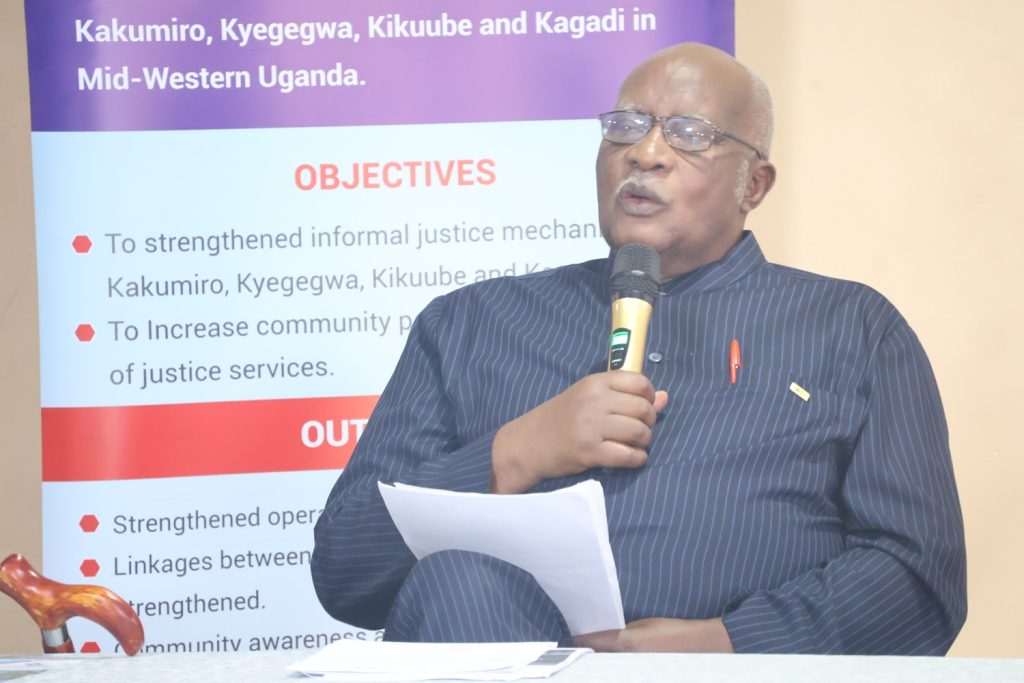
Justice Tabaro said the informal Justice system is more understandable to the average person than the formal courts and if properly practiced it will solve problems in the society.
Barbara Kilei, Country manager of the International Development Law Organization in Uganda, a lead supporter organization of the “Deepening Community Access to Justice Project, DCAJP” said the importance of informal justice systems is to find ways of either recognizing the outcomes or enforcing the outcomes that are coming out of these particular justice systems.
“When you look at where people are going to access justice from, it’s for the elite few people who run to courts if law for justice redress but the rest of us either run to the neighbors, local councils or police because those are the systems they have known for long time as the ones to assist them in dissolving the disputes that are within their community” Barbara narrated.
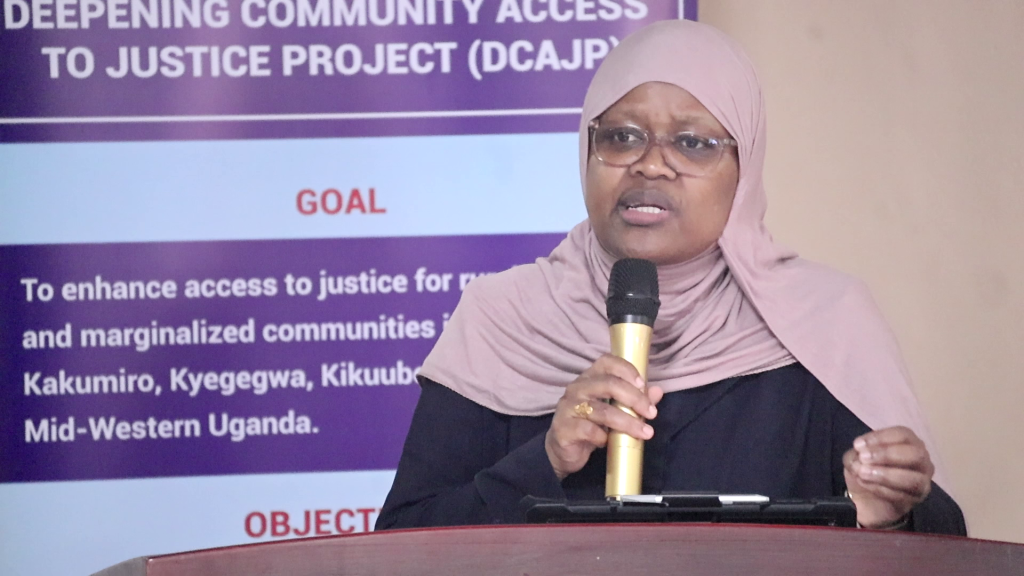
Barbara applauded World Voices Uganda for confirming willingness to recognize the importance of the different alternative justice systems for the delivery of justice.
“It is our call to the public especially you who as the representatives of the formal state actors to capitalize on the public accessibility and familiarity of these systems and integrate their efforts to ensure that we leave no one behind in delivery of justice and we shall therefore be able to achieve justice for all,” Barbara Kilei said.
She was speaking during the one day high-level capacity enhancement training for core formal justice actors about the nature and operations of informal justice systems at Silver Springs Hotel, Bugoloobi in Kampala on Wednesday 28th August, 2024.